Democracy is not only defended in parliaments, elections or EU institutions. It is also lived every day in cities, where residents, civil society organisations and public authorities are testing new ways to make decisions together.
From social housing in Budapest to climate action in Izmir, youth participation in Timisoara and migrant-led policy design in Barcelona, local democratic innovation is showing how people can be given a more direct role in shaping the places where they live.
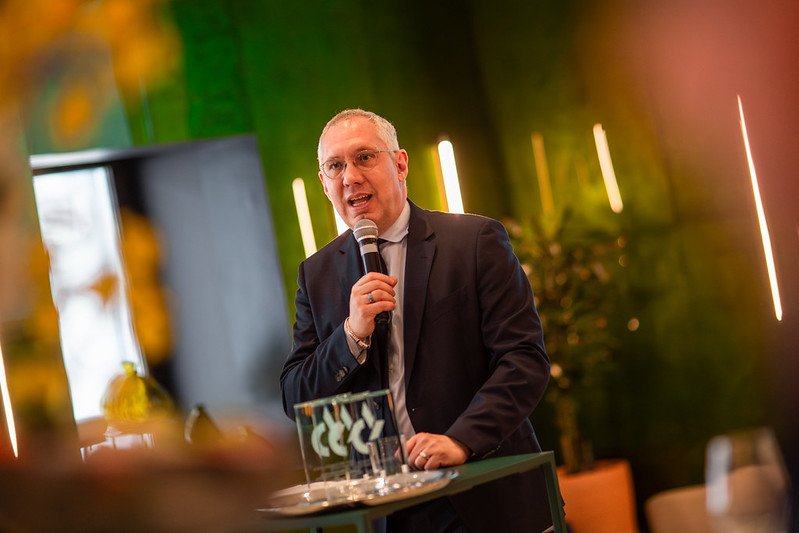
“Democracy is something that is lived daily in cities,” said André Sobczak, Secretary General of Eurocities. “The old way of taking decisions is questioned, with local leaders, civil society organisations and public authorities looking for meaningful and effective ways of engaging various groups of people, especially those that were traditionally disenfranchised.”
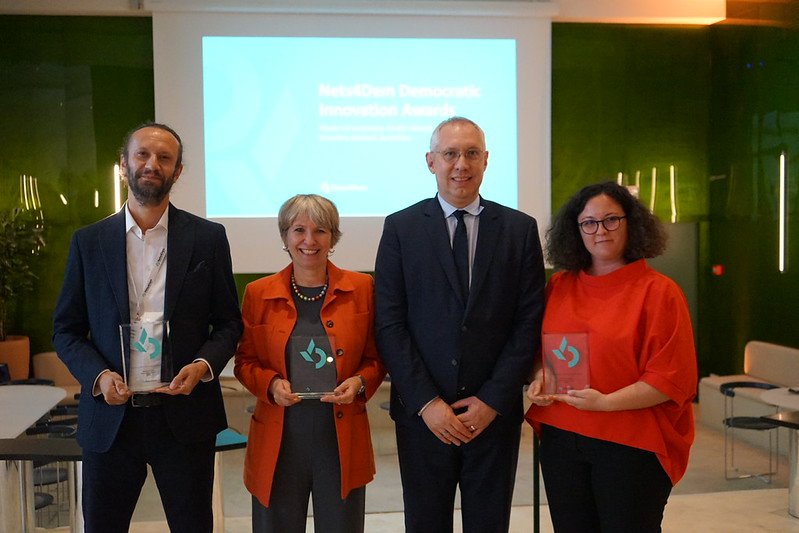
This was the focus of the Nets4Dem Democratic Innovation Awards ceremony, held in Brussels on 5 May during the Nets4Dem Conference, Local Action, European Impact: Strengthening Democratic Resilience.
Presented by Sobczak, the awards recognised democratic innovations that have been improved, developed or implemented with support from Nets4Dem capacity-building programmes, including Democracy Labs, Rising Stars mentorships and the Democratic Innovations Accelerator.
The awards aimed to showcase inspiring approaches, support peer learning across cities and organisations, strengthen the Nets4Dem community, and create greater visibility for democratic innovation at local level.
Democracy in a housing block
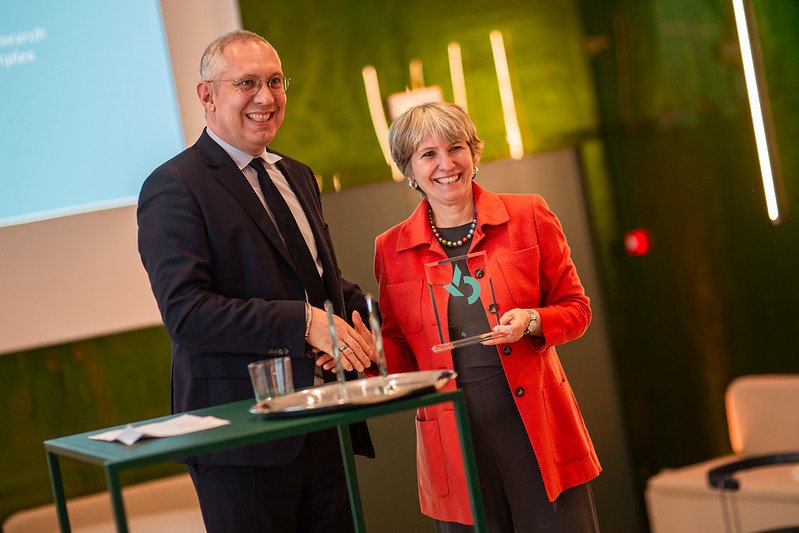
The Emerging Innovation Award went to the Hungarian Association of Psychodrama for Safe at Home, a participatory action research project in Budapest’s largest social housing complex.
The project was developed in K22, the city’s largest social housing block. It addresses challenges in the building by working with residents to develop solutions for safe housing from within the community.
Using art-based and participatory methods, residents, social workers, research groups and professionals developed a shared future vision for the block. Their ideas included establishing a participatory budget for the building, allowing NGOs to use vacant rooms, and creating a working group of decision-makers to prepare renovation plans.
“Our democracy project doesn’t take place in parliament, nor on grand stages,” said Katalin Hegyes, psychodrama leader at the Hungarian Association of Psychodrama. “It takes place in the largest social housing building of Budapest.”
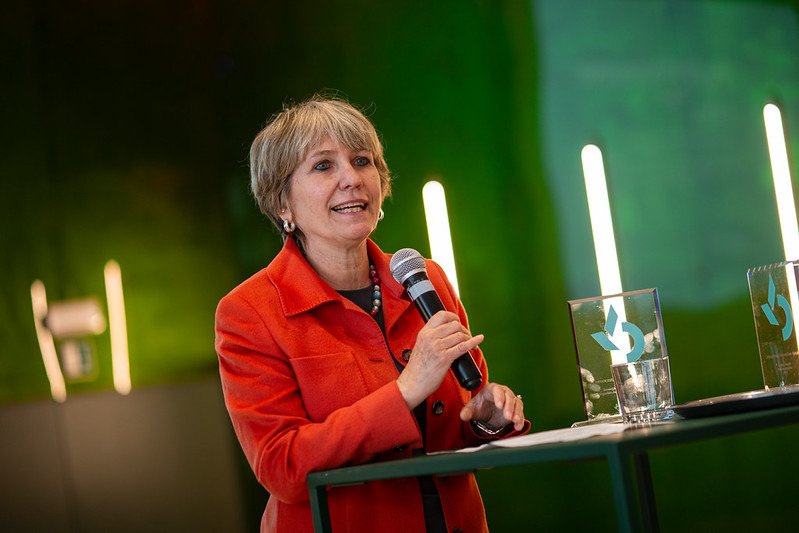
The jury praised the project as an outstanding example of participatory action research that explores democratic decision-making in housing, a policy area that directly affects people’s lives, but where resident participation is still rare.
Looking ahead, the jury encouraged the project team to explore how participation could go beyond shared spaces and become part of longer-term democratic management. It also pointed to the potential for replication in other housing complexes and neighbourhoods.
For Hegyes, the award was a recognition of residents who had found confidence in their own voice.
“It shows that democracy thrives when people get involved, take responsibility and believe in their own voice,” she said. “This award belongs to all those who have learned to believe in themselves again.”
Residents shaping climate action
The Impact Award went to YUVA Association for the Izmir Climate Citizens’ Assembly, developed in cooperation with Izmir Metropolitan Municipality and the HUDOTO Foundation.
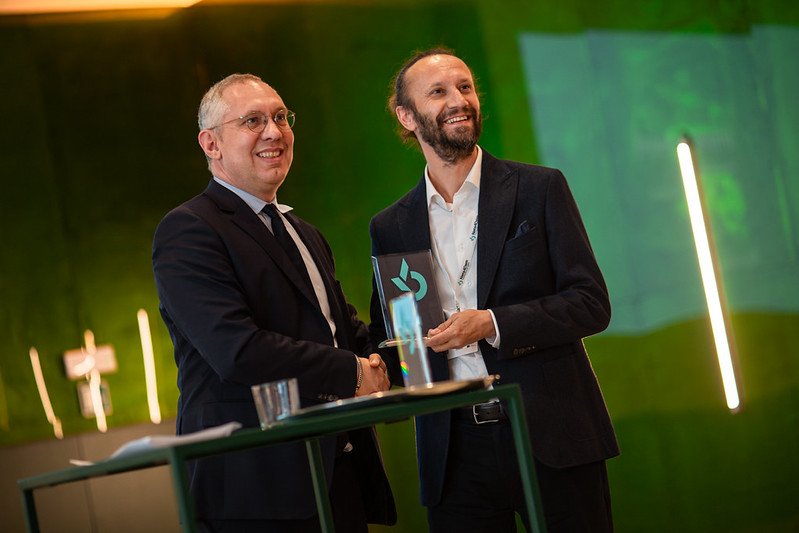
Implemented in Izmir, Turkey, from January 2025 to March 2026, the project was the first citizens’ assembly in the country focused on local climate governance.
Its aim was to involve residents in shaping local climate action and to connect citizen deliberation with municipal planning processes. The assembly produced 30 citizen recommendations and an implementation guide designed to support learning and replication in Türkiye.
The jury commended the strong collaboration with the municipality and the involvement of local stakeholders. It also recognised the careful use of a demanding citizens’ assembly methodology, particularly in a context where this approach was being applied for the first time to local climate governance.
Erdem Vardar, Founding Director of YUVA Association, thanked Nets4Dem and the Rising Stars Mentorship Programme for supporting the project.
“I want to thank Nets4Dem for supporting us,” he said. “I want to thank my mentor and all the people who supported us during the Rising Stars Mentorship Programme.”
Vardar also pointed to the next steps for the model, noting that the European Climate Foundation will support a new Antalya Climate Assembly ahead of COP31 in Turkey.
The jury encouraged the organisers to continue strengthening the follow-up process, especially by tracking how citizen recommendations are addressed by the municipality.
Young people deciding for their city
The Inclusion Award went to the Romanian city of Timisoara for Timisoara Decides, the city’s 2025 high school participatory budgeting campaign.
The initiative focused on students aged 14 to 18, a group that often has low levels of engagement in public decision-making. Through the campaign, young people were invited to identify community needs beyond their own, consult and negotiate with peers, turn ideas into project proposals, and understand public authorities’ rules and constraints.
The project also helped students better understand the relationship between schools and the city administration. Around 300 students from 17 high schools developed 64 proposals, and 6,537 students took part in the vote.
“I’m deeply grateful to receive this Inclusion Award,” said Despina Ungureanu, Head of Participatory, Inclusive Governance and Institutional Transparency at the Municipality of Timisoara. “It stands not only as a recognition of our collective work, but also as a testament to the power of young people when they are invited to contribute meaningfully in shaping their communities.”
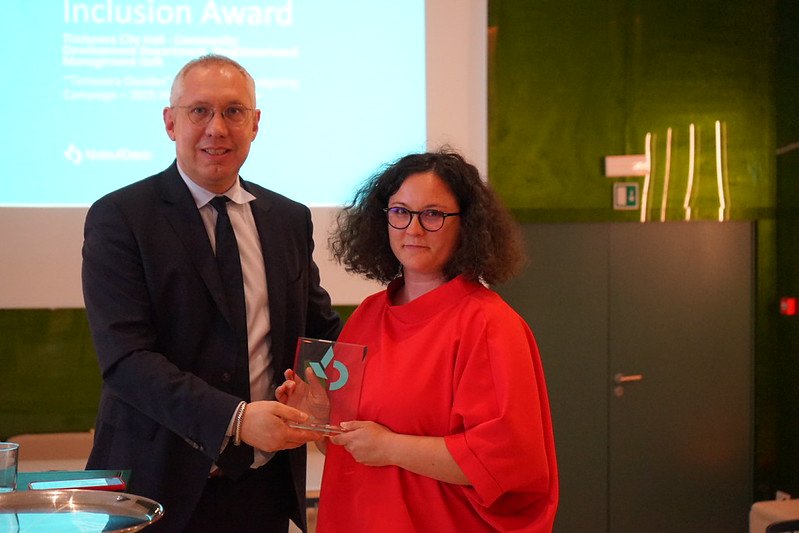
The jury praised the project for targeting young people and involving them in meaningful decision-making. It also highlighted the city’s thoughtful approach to geographic and ethnic representation, and its work with a diversity of schools.
For the jury, youth participatory budgeting is an important tool for political and civic education. Future development could focus on scalability and replication, including how to involve schools that were not part of the original process. One suggestion was to work with students from participating schools as ambassadors to new schools or districts.
Ungureanu said the project reflected Timisoara’s wider approach to inclusion and innovation.
“Diversity fuels innovation, and innovation generates prosperity,” she said. “When young people are given space, trust and responsibility, they do more than contribute. They lead, they challenge assumptions, and they expand what we believe is possible.”
A special mention for migrant voices
In addition to the three awards, the jury gave an honorary mention to the Platoniq Foundation for Migrant Constitution Dialogues – Right to the City Legislative Theatre Labs in Barcelona.
The project is a series of deliberative labs using Legislative Theatre and creative policy design to enable migrants and racialised communities to shape urban policy proposals.
The honorary mention recognised the project’s work to open democratic spaces for communities whose voices are too often excluded from local decision-making.
Working together for democratic change
The ceremony closed with thanks to the jury, Nets4Dem partners who organised the capacity-building activities, and the award winners.
“The Nets4Dem Awards are representative of democratic innovations at different urban levels,” Sobczak said, “showing how working together between local governments, NGOs, researchers and residents can lead to positive change.”
The winning projects show that democratic resilience is built through practical, local action. It can mean residents shaping the future of their housing block, citizens influencing climate policy, students deciding on projects for their schools, or migrant communities designing policy proposals for their city.
Across all these examples, one message stands out: democracy becomes stronger when people are given real opportunities to take part, share responsibility and see that their voices can lead to change.