
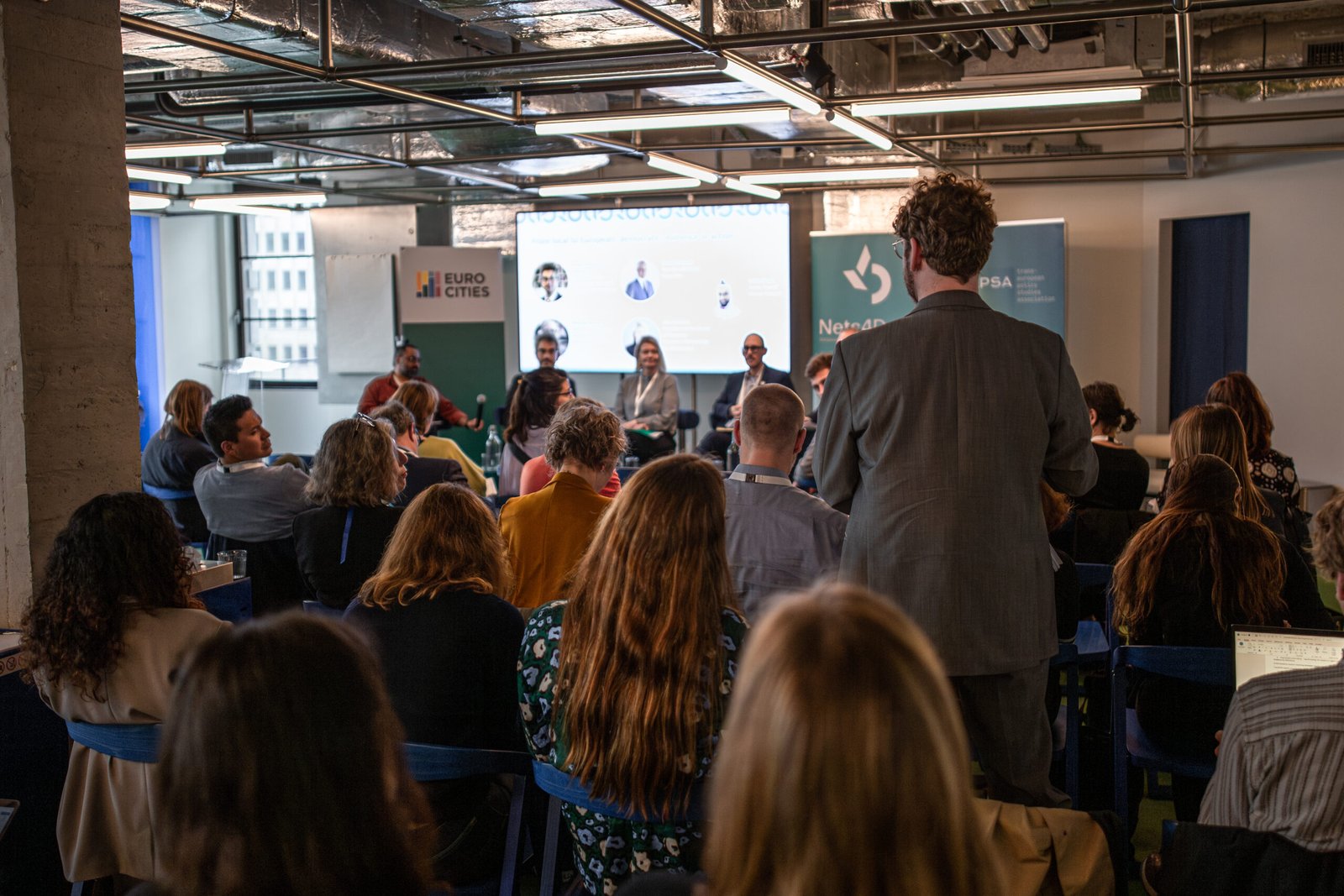
Democracy is increasingly under pressure across Europe. Polarisation is hardening public debate, civic space is shrinking, disinformation is weakening trust, and many elected representatives are facing intimidation both online and offline.
But the response to these challenges cannot come only from national parliaments or EU institutions. It is also being shaped where democracy is most immediate: in cities, neighbourhoods, schools, housing blocks and public spaces.
“Europe is not immune to democratic pressures, but we have active citizens,” says Paul Zoubkov, Head of Global Programmes and Knowledge at Democracy Reporting International. “We have committed local governments, independent civil society and institutions that continue to invest in democratic renewal.”
That combination matters. While many people feel distant from political institutions, local governments can create direct opportunities for residents to shape decisions that affect their everyday lives, from climate action and housing to schools, public space and social inclusion.
For cities, democratic resilience is not an abstract concept. It is built through practical work: listening to residents, protecting civic space, supporting local media, involving people beyond election cycles, and making sure participation leads to visible results.
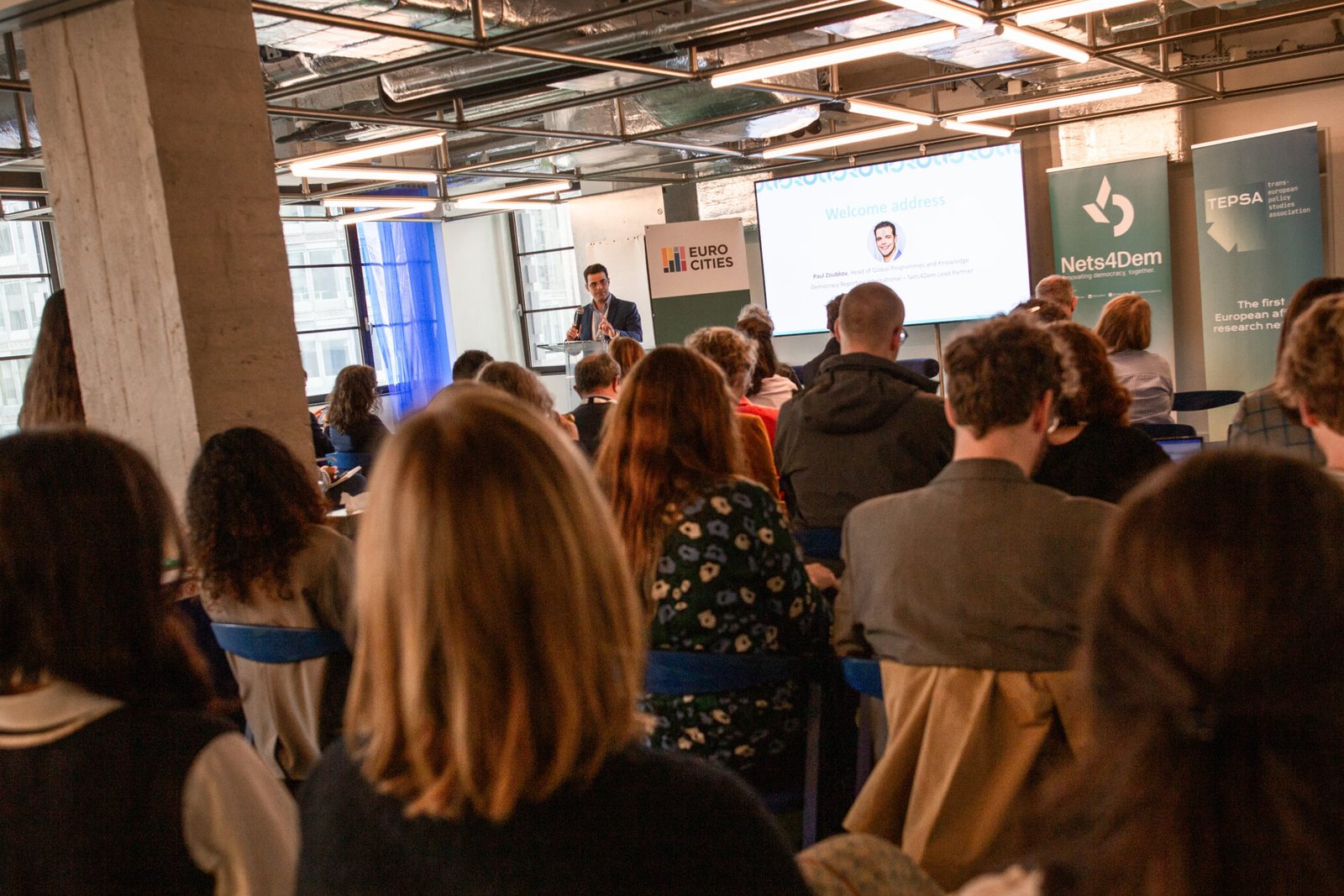
Photo © TEPSA
Local action, European impact
This was the starting point for the Nets4Dem Conference, held in Brussels this week. Organised by Eurocities and TEPSA, the event brought together cities, EU institutions, civil society organisations and researchers to explore how democratic resilience can be strengthened in practice, and how local action can help shape Europe’s wider democratic response.
The discussion came at a crucial moment. The European Democracy Shield and the planned European Centre for Democratic Resilience have brought renewed attention to how Europe protects and strengthens democracy. However, participants in Brussels made clear that democratic resilience cannot only mean responding to threats from outside. It must also mean rebuilding democracy from within.
Frederik Ceulemans, Alderman of Urban Renewal, Climate, Citizen Participation and Dutch-language Affairs, said democratic pressures are no longer distant or abstract. “The world is changing, authoritarian forces are rising,” he said. “Dissatisfaction with democratic representation is growing, not only globally, but also here in our cities, in our neighbourhoods.”
For Ceulemans, cities remain one of democracy’s strongest assets because they are close enough to rebuild trust through concrete action. “City governance is immediate and tangible,” he said. “It is where trust can be rebuilt through transparency, proximity, participation and shared responsibility.”
He pointed to Brussels’ diversity, multilingualism and role as European Capital of Democracy 2027 as an opportunity to test new forms of participation in a complex urban setting.
A shared European project
Discussions during the conference examined how the European Democracy Shield and the European Centre for Democratic Resilience can become a genuinely shared project, connecting EU institutions, national governments, cities, civil society and research.
Sahib Singh, Senior Expert at Demos Helsinki, said Europe’s choices in the coming years will have long-lasting consequences. He pointed to data showing that 94 countries suffered a measurable decline in democratic performance in 2024.
Yet Singh also stressed that the picture is not only one of decline. “Citizens have not given up,” he said.
“They have disengaged from institutions, not necessarily from democracy itself.”
Daniel Fleischer-Ambrus, Team Lead for Democracy at the European Commission’s DG JUST, explained that the European Democracy Shield is built around three main areas: safeguarding information integrity, supporting democratic institutions and elections, and boosting societal resilience and citizen participation.
However, he stressed that implementation must involve those working on democracy in practice. “What matters is not just the overall output, but that we do this together,” he said. “We build joint ownership.”
From the perspective of civil society, Anu Juvonen, Executive Director of Demo Finland and President of the European Partnership for Democracy , warned that civic organisations must not be treated only as delivery partners. They also have a vital watchdog role, especially as civic space comes under pressure.
“We can only do it together,” she said, calling for stronger cooperation between institutions and civil society.
Michael Runey, Adviser at International IDEA, said democratic resilience should not be understood as simply returning to the way things were before a crisis. More importantly, it means adapting democratic systems so they become stronger and more durable after stress. “Democracy is not necessarily inherently resilient,” he said. “It does not happen automatically.”
For Andre Sobczak, Secretary General of Eurocities, cities are already dealing with democratic challenges. Mayors increasingly face threats, intimidation and violence, while national political pressure is also being felt in cities such as Budapest and Istanbul.
He added that Eurocities’ research shows democracy has become the second highest priority for mayors, alongside affordable housing, after climate action. “This year, democracy has come up as the second highest priority for our mayors,” he said. “This was not at all the case even one year ago.”
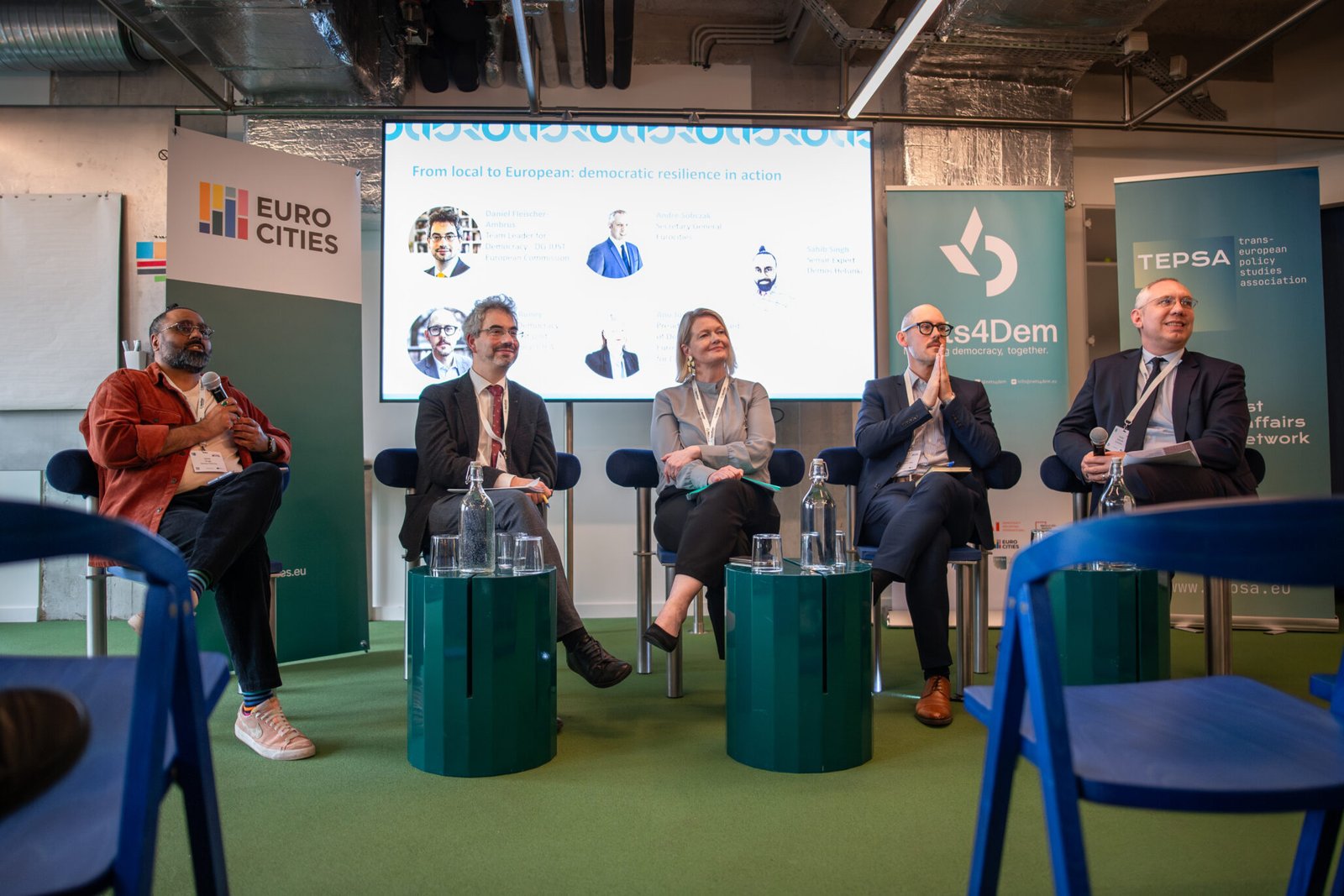
Photo © TEPSA
Building democracy from the ground up
The conference also explored how democratic resilience is built through practical projects that give people a direct role in shaping decisions. City examples were presented, showing that participation becomes meaningful when residents can see a clear link between their ideas and real outcomes.
In Budapest, the Hungarian Association of Psychodrama presented Safe at Home, a participatory action research project in K22, the city’s largest social housing block. Residents, social workers, researchers and professionals worked together to identify needs and discuss the future of the building directly with decision-makers. “Our democracy project doesn’t take place in parliament, nor on grand stages,” said Katalin Hegyes, psychodrama leader. “It takes place in the largest social housing building of Budapest.”
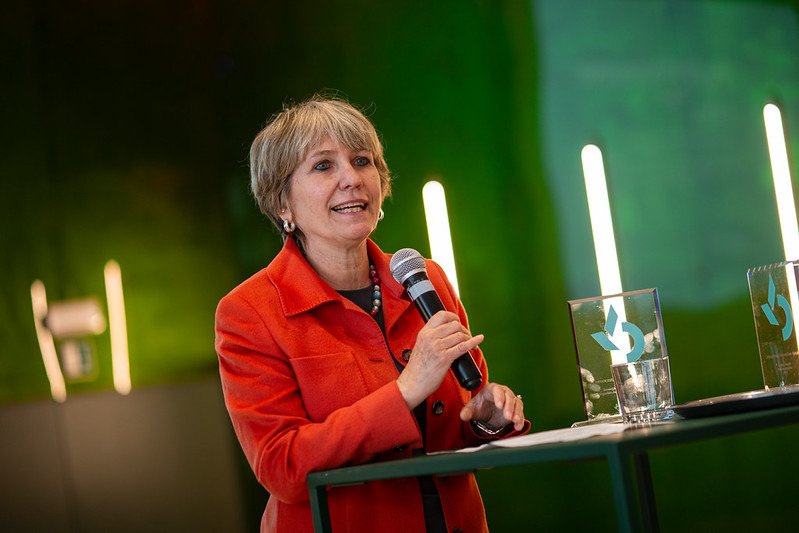
Photo © TEPSA
The project developed a shared vision for K22, including ideas for a participatory budget, opening vacant rooms for NGO use, and creating a working group to prepare renovation plans.
YUVA Association presented Turkey’s first local Climate Citizens’ Assembly, developed with Izmir Metropolitan Municipality and the HUDOTO Foundation. The assembly brought residents into local climate governance, producing 30 citizen recommendations and an implementation guide to help others replicate the model.
Erdem Vardar, Founding Director of YUVA Association, said Europe must be more courageous in supporting democratic actors beyond the EU. “For years, the EU was the light of democracy,” he said. “Its rhetoric needs to be more frank, open and courageous.”
The city of Timisoara shared Timisoara Decides, a participatory budgeting campaign for high school students aged 14 to 18. Around 300 students from 17 high schools developed 64 proposals, with over 6,500 students taking part in the vote.
Despina Ungureanu, Head of Participatory, Inclusive Governance and Institutional Transparency at Timisoara City Hall, said the process helped young people understand how public decisions are made and how they can influence their communities.
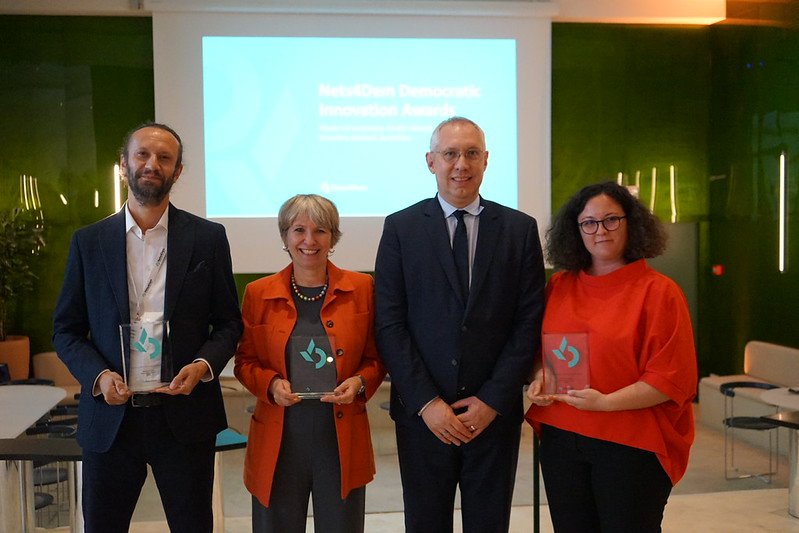
Photo © TEPSA
Turning research into democratic action
Alongside practical examples, the conference explored what research can tell policymakers about democratic innovation: whether participatory, deliberative and co-creative approaches work, when they work, for whom and under what conditions.
Sahib Singh said research shows citizens’ assemblies can increase political knowledge, reduce polarisation, build trust and increase openness to opposing views. However, he warned that good outcomes depend on good design.
He also pointed to evidence from participatory budgeting outside Europe, including in Latin America, where it has been linked to increased public spending on schools, housing, water, sewage infrastructure and healthcare.
Melisa Ross, Co-lead and researcher at the Global Citizens’ Assemblies Network, argued that democratic innovations should not only help societies “bounce back” after crises, but also “bounce forward” by deepening democratic commitments.
“When you have legal infrastructure, continuity, political embedding, problem-solving capacity and some form of linkage to decision-making, then these participatory institutions can help the broader system to survive stress,” she said.
Tara Tepavac, Researcher at the Institute for Philosophy and Social Theory, presented findings from Nets4Dem’s Knowledge Database on Democratic Innovations, which analysed EU-funded projects from 2009 to 2023. She said the research confirmed the importance of local democracy, with most documented democratic innovations focused on the sub-national level.
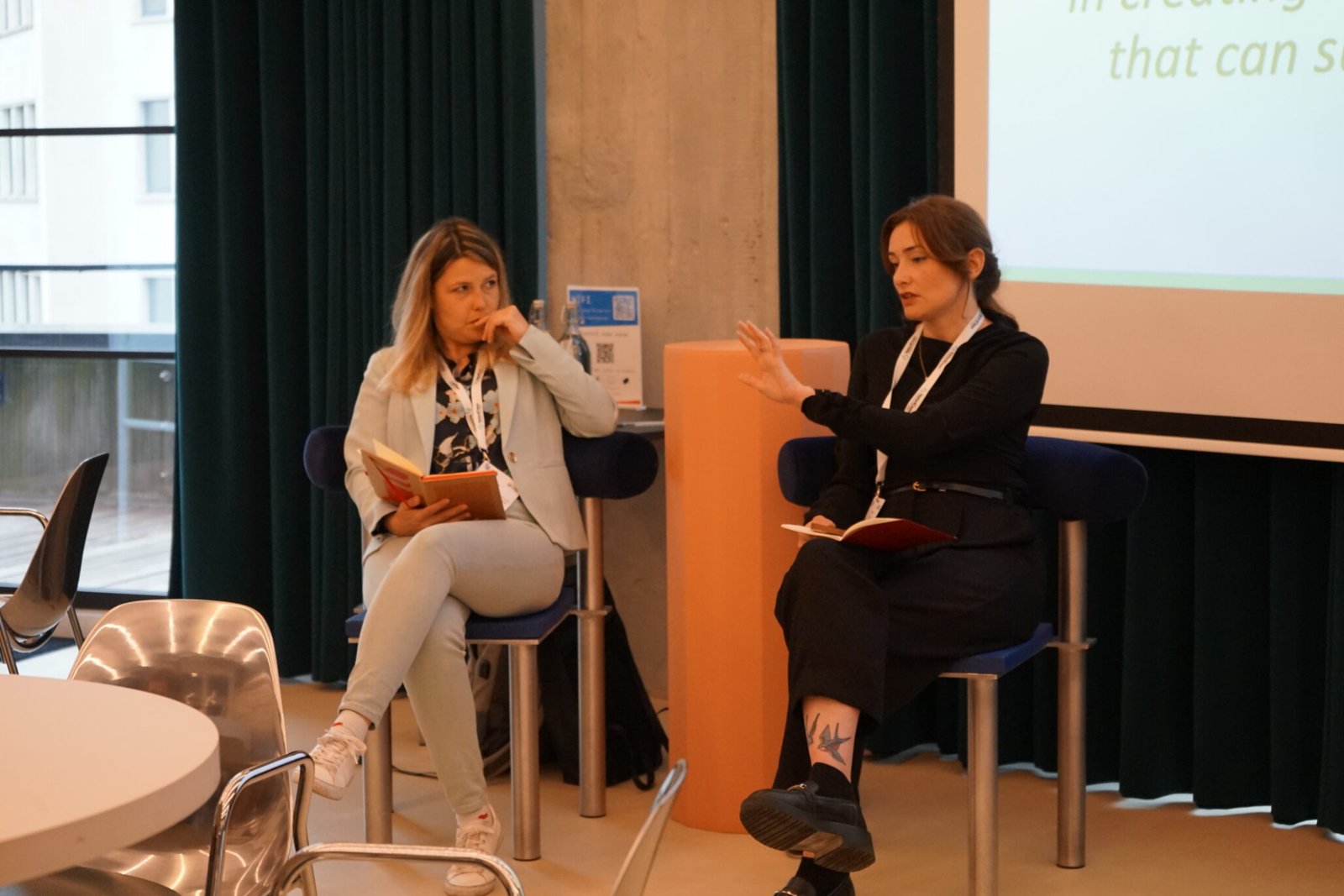
Photo © TEPSA
For Tepavac, the main lesson is that participation must be more than symbolic. “Resilience is emerging when democratic innovation and participation is not symbolic,” she said, “but rather structured, inclusive and consequential.”
The discussion also highlighted gaps that still need to be addressed, including administrative capacity, funding, impact measurement and better understanding of how democratic innovations affect institutions over time. Singh argued that democratic innovations must move beyond isolated experiments if they are to become part of everyday governance. “We need to jump from experimentation and early adoption through to mainstreaming,” he said.
Recognising democratic innovation
During the conference, the Nets4Dem Democratic Innovation Awards celebrated projects that have been improved, developed or implemented with support from the Nets4Dem project’s capacity-building programmes.
The awards recognised initiatives that show how democratic innovation can work in practice, while supporting peer learning between cities and organisations and giving greater visibility to local democratic action.
The Emerging Innovation Award went to the Hungarian Association of Psychodrama for Safe at Home in Budapest. The Impact Award went to YUVA Association for the Izmir Climate Citizens’ Assembly. The Inclusion Award went to Timisoara for Timisoara Decides, the city’s 2025 high school participatory budgeting campaign.
Speaking at the awards ceremony, Andre Sobczak said the awards were intended to encourage continued action. “It is not about just giving an award,” he stated. “It is about ensuring we continue to work further to drive forward our democratic values.”
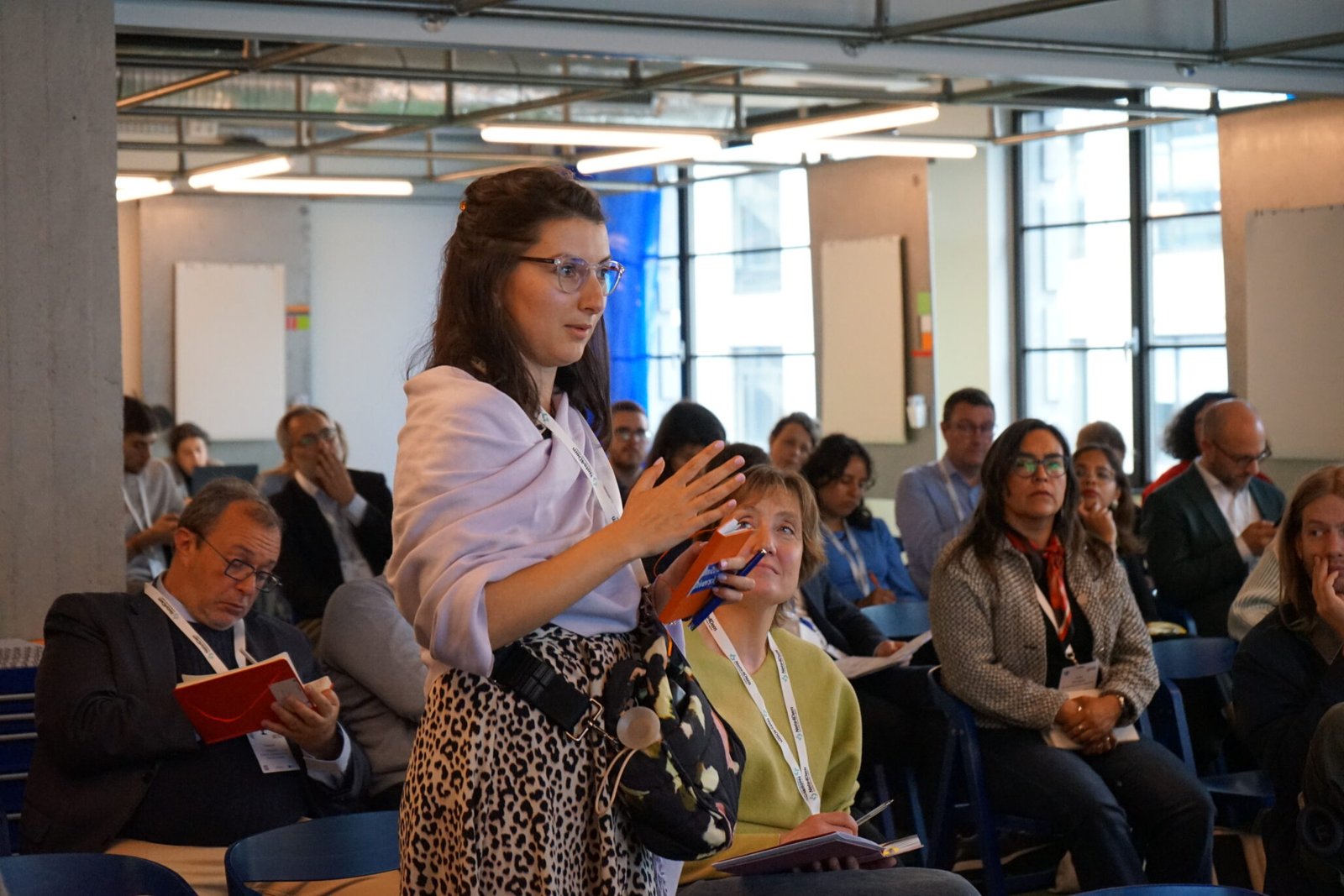
Photo © TEPSA
Democracy as everyday work
In his closing remarks, Jean-Louis De Brouwer, Director of the European Affairs Programme at the Egmont Institute, said democratic resilience must be linked to Europe’s wider challenges, including climate change, inequality, technology and security.
“Enhancing democratic resilience is not an end in itself,” he said. “Only truly democratic processes will provide appropriate and sustainable responses to these challenges.”
That message ran throughout the conference: democracy cannot be defended only through strategies, institutions or funding programmes. It must also be practised in daily life.
From Brussels to Budapest, Izmir and Timisoara, the many local examples showed that democratic resilience grows when people are not only asked to trust democracy, but are given real opportunities to shape it.
